The term "multi-agent orchestration" has been used to describe everything from a basic automation chain to a fully autonomous decision network. That range makes it nearly meaningless in vendor conversations. Let's define it precisely, then talk about when the architecture is worth the complexity it introduces.
Multi-agent orchestration is an execution model where two or more specialized agents operate on different segments of a process, passing state between them under the management of an orchestrator that maintains a unified execution context and audit trail. The key words are "specialized," "passing state," and "unified context." If those three elements aren't present, you have a chain of automations, not orchestration.
Single Agent vs. Orchestrated Multi-Agent
A single agent handles one process end-to-end. It receives an input, applies its instructions and tools to that input, and produces an output or escalates. For the majority of ops workflows — lead routing, approval processing, data sync, onboarding provisioning — a single well-configured agent is the right architecture. It's simpler to debug, easier to trace in audit logs, and has less failure surface.
The argument for multi-agent orchestration starts when a process has characteristics that make a single agent architecture strained:
Distinct expertise domains within the same process. A vendor onboarding workflow might require legal review logic, financial risk evaluation, and IT security assessment. These are genuinely different knowledge domains with different criteria. Trying to pack all of them into a single agent creates an agent that's average at all three rather than authoritative in each.
Parallelizable work units. Some processes have independent subprocesses that can run concurrently. If a single agent runs them sequentially, you're leaving execution time on the table. An orchestrator can dispatch parallel agents and collect their results, reducing total runtime.
Different reliability requirements within the same process. A data extraction agent that reads structured records has very different failure modes than a communication agent that sends customer-facing messages. Running them as separate agents lets you configure different retry policies, confidence thresholds, and escalation paths for each — without one agent's sensitivity settings affecting the other.
Process scale that exceeds a single context window. For very long-running processes with many intermediate states, a single agent maintaining full context throughout can become unwieldy. Specialized agents that own a bounded segment of the process each carry a smaller, more focused context.
What Orchestration Actually Requires
Multi-agent orchestration is not just running two agents in sequence. The distinguishing features are:
Shared execution state. When Agent A completes its segment and hands off to Agent B, Agent B has access to everything Agent A did — not a summarized output, but the actual execution state. If Agent A evaluated a contract and flagged three risk factors, Agent B (a financial review agent) should see which specific clauses were flagged and why, not just "contract flagged." Without this, each agent in the chain operates with partial context and can't catch interactions between its domain and the prior agent's findings.
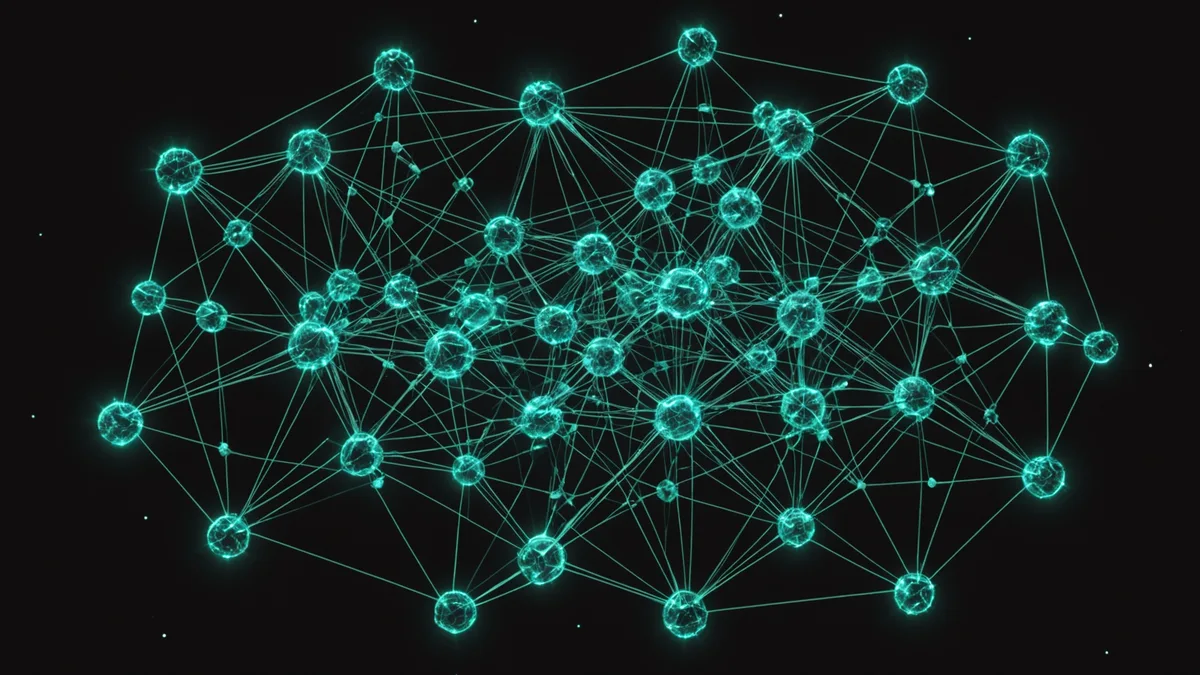
An orchestrator that manages the DAG. A directed acyclic graph (DAG) defines the execution order: which agents run first, which can run in parallel, which gates require a prior agent's output before proceeding, and what happens when an agent fails or escalates. The orchestrator enforces this structure. Without it, you have a manually coded sequence that breaks whenever the process needs to change.
A unified audit trail. The audit log for an orchestrated multi-agent execution should read as a single coherent process record, not as separate logs from each agent. An auditor reviewing a vendor approval should see: intake agent received the application at T0, risk assessment agent evaluated and scored at T1, legal review agent flagged clause 4.2 at T2, human legal reviewer confirmed the flag and approved with modification at T3, onboarding agent provisioned access at T4. One timeline, multiple agents, traceable end-to-end.
Graceful handoff on uncertainty. When one agent in the chain reaches below its confidence threshold, the handoff to a human should include the full context accumulated by all prior agents in that execution. A human reviewer who only sees the escalation point — without the work done by agents earlier in the chain — is starting from scratch. That defeats the purpose.
A Concrete Orchestration Scenario
Consider a procurement approval workflow at a growing professional services firm. A new vendor application arrives: a SaaS data analytics tool, annual contract, $48K. The process requires IT security assessment, finance approval (any vendor over $25K), and a standard contract review.
In a single-agent model, one agent handles all three evaluations sequentially. It applies a security checklist, then checks the budget threshold, then reviews the contract. This works if the three evaluations are genuinely independent. But they often aren't: a security finding (the vendor's data processing is offshore) might affect the finance risk evaluation (different liability treatment) and the contract review (need to add GDPR data processing addendum). A single agent handling all three domains can catch these interactions, but it's doing three different kinds of work with three different criteria sets.
In an orchestrated model: an intake agent normalizes the application data and determines that IT security, finance review, and legal review are all required. It dispatches the security agent and finance agent in parallel (they're independent). Both complete with outputs. The orchestrator checks: security agent approved with one flag (offshore data processing); finance agent approved (within Q2 budget envelope). The orchestrator then dispatches the legal review agent with the security flag explicitly surfaced in the handoff context — "note: vendor processes data in EU/APAC per their DPA; review for data processing addendum requirement." The legal agent applies the correct analysis with that context, drafts the addendum clause, and the workflow completes with a structured approval recommendation that includes all three agents' findings.
The key difference: the security flag shaped the legal review in a way that wouldn't have happened if each agent had only its own narrow input.
When Orchestration Is Overkill
This is the part that often gets skipped in architecture discussions. Multi-agent orchestration adds complexity. Specifically: it adds more failure surfaces (each agent can fail independently), more debugging surface (you need to trace across multiple execution contexts), and more configuration overhead (each agent needs its own instructions, tools, and confidence parameters).
That complexity is worth paying when the process genuinely benefits from specialization or parallelism. It's not worth paying when:
The process is a single-domain evaluation that one agent can handle clearly. Routing an expense reimbursement based on amount and policy is one decision with one knowledge domain. One agent, one policy document, one approval threshold.
The "parallel" subprocesses don't actually interact. If you can guarantee that Agent A's output never affects Agent B's evaluation, you can run them independently without shared context and just collect the results. That's closer to a batch job than orchestration.
You're still learning what your process exceptions look like. Orchestration is harder to modify mid-stream. If your process is still evolving — edge cases emerging, policy being refined — a single agent with good logging is easier to iterate on. Add orchestration when the process is stable enough that you know the domain boundaries.
We're not saying orchestration is advanced or experimental. It's a production architecture that we run in Nexwatt. The point is that it's the right tool for a specific class of process, not a default choice. The wrong time to reach for orchestration is when the motivation is "this sounds more sophisticated" rather than "this process has a real problem that orchestration solves."
The Monitoring Requirement
A practical note that gets underweighted in orchestration architecture discussions: monitoring. A multi-agent orchestration produces more execution events per process run, more intermediate states, and more potential failure points. Without a monitoring layer that surfaces anomalies — unusual execution times, agents hitting their escalation threshold at higher rates than expected, specific handoff points where failures concentrate — you're flying blind.
MTTR (mean time to resolution) for orchestration failures is also higher if you don't have good tooling, because the failure may have occurred three steps back from where the error surfaced. Investing in execution observability before you need it — not after the first production incident — is the mature path.
Evaluating Whether Your Process Is Ready
A quick diagnostic for whether a process warrants orchestration:
Does it span three or more genuinely distinct evaluation domains? Does a finding in one domain routinely affect the evaluation in another? Would running domain evaluations in parallel save meaningful time or reduce inter-domain contamination? Is the process stable enough that you know where the domain boundaries are?
If yes to most of these: orchestration is probably the right architecture. If you're uncertain about the domain boundaries: build the single-agent version first, observe where it struggles, and design the multi-agent split based on where the single agent's generalist treatment is weakest. That's a much more reliable path than designing the orchestration topology from theory.